Empowering Educators to Cultivate Greener Schools: SEAMEO BIOTROP Trains 30 Jakarta Teachers in Sustainable Urban Farming
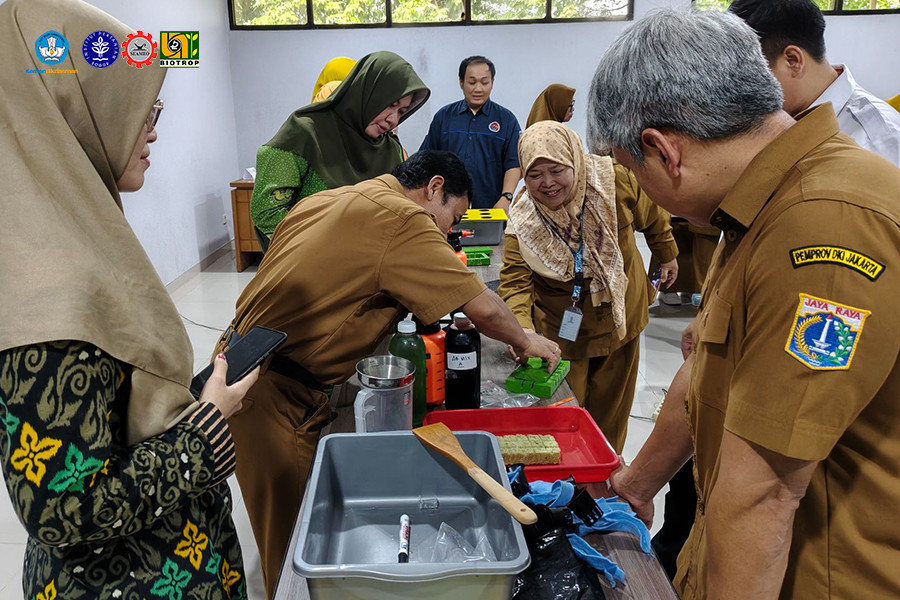
Jakarta, Oktober 2026. To strengthen food resilience and integrate practical environmental stewardship into metropolitan classrooms, SEAMEO BIOTROP, in partnership with Balai Guru dan Tenaga Kependidikan (BGTK) DKI Jakarta, Ministry of Primary and Secondary Education, conducted an intensive Urban Farming Training for 30 educators on 20 - 23 October 2026. Hosted at the BGTK DKI Jakarta office, the four-day program equipped teachers with productive, innovative, and sustainable urban farming competencies designed to transform school grounds into green learning spaces.
The training directly addresses acute metropolitan challenges, where limited land availability, rising food demands, and the urgent need for sustainable environmental management require practical solutions. Urban agriculture provides schools with an accessible model to optimize compact spaces, foster environmental literacy, and expose youth directly to sustainable food production and ecological awareness.
Officially opening the training, the Deputy Director for Programme of SEAMEO BIOTROP, Dr. Doni Yusri, alongside the Head of BGTK DKI Jakarta, Erfan Agus Munif, M.Pd., delivered joint opening remarks. Both leaders underscored the critical importance of elevating teacher capacity to support innovative education that remains directly relevant and responsive to urban environmental challenges.
Delivering the activity coordination report, Risa Rosita., affirmed that educators hold a strategic role in introducing and developing urban farming among the younger generation. Rosita emphasized that participants are expected not only to master practical agricultural skills, but to serve as key drivers and catalysts (penggerak) who actively initiate hands-on urban farming practices across their respective school environments.
To turn these strategic goals into concrete actions, participants took part in four days of theoretical instruction, technical demonstrations, and direct practice across five core areas: hydroponics, edible mushroom cultivation, potted fruit tree planting (tabulampot), aquaponics, and freshwater fish farming. These modules provided teachers with versatile approaches to cultivate crops and manage integrated systems within the spatial constraints of their campuses.
The program reflects SEAMEO BIOTROP’s broader institutional commitment to advancing human resource capacity in tropical biology and the sustainable utilization of biological resources. By strengthening collaborations across education, the Centre aims to inspire school communities to build an active culture of planting, utilize resources responsibly, and safeguard food security starting from their immediate surroundings.