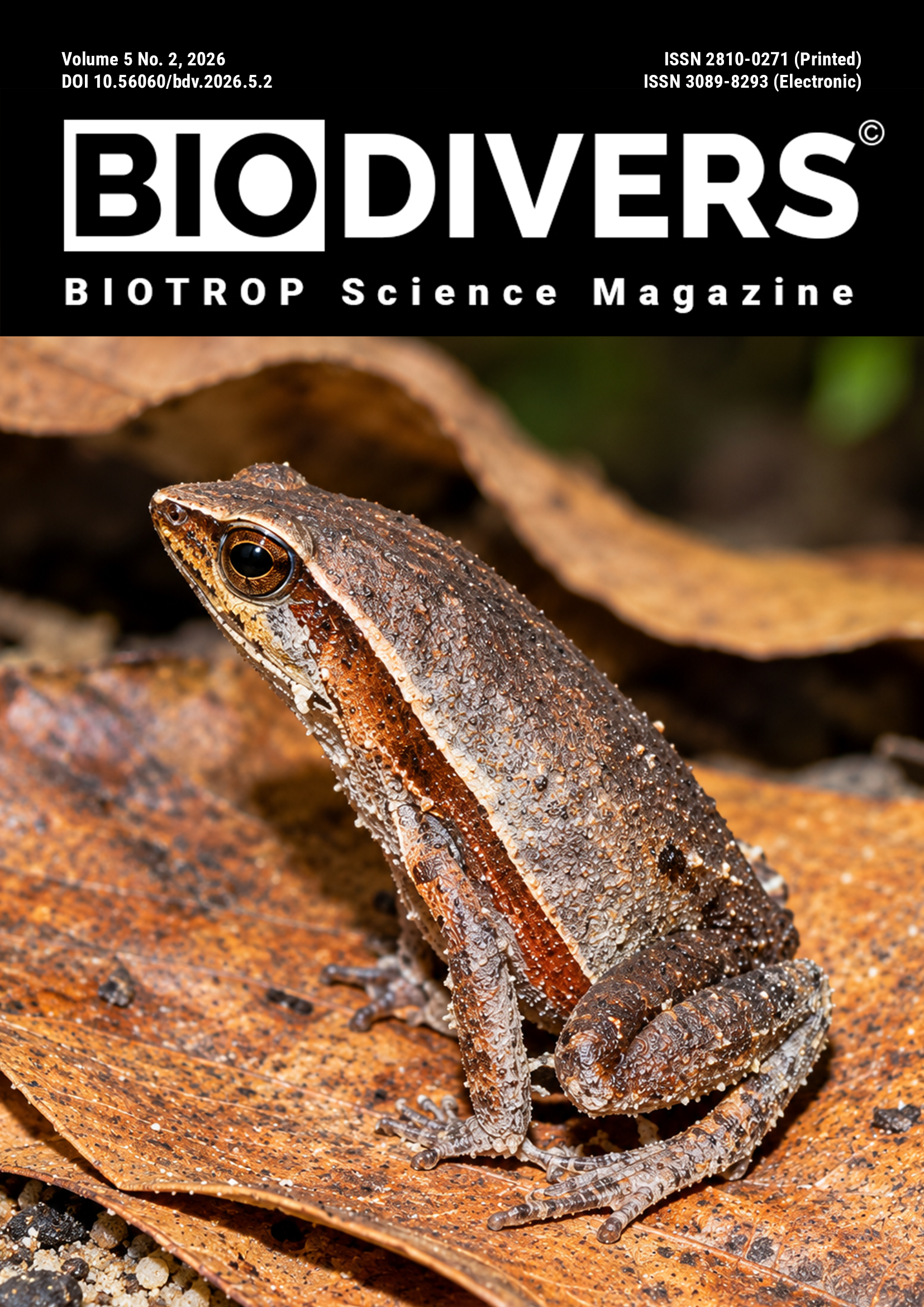
BIODIVERS Vol 5 No 2
KMD, 2026Downloaded 0 times, Read 187 times
Description
Foreword from the Director of SEAMEO BIOTROP
Biodiversity forms the foundation of ecological stability, human well-being, and sustainable development. Across Southeast Asia, rich biological resources sustain food systems, regulate climate, support livelihoods, and shape the cultural landscapes of our societies. Yet these ecosystems are increasingly under pressure from deforestation, land-use change, pollution, and climate-related disturbances. In the face of these challenges, scientific knowledge and regional collaboration become essential to ensure that biodiversity continues to support resilient ecosystems and communities. It is therefore a pleasure to present BIODIVERS Vol. 5 No. 2, which brings together a collection of scientific contributions highlighting the important role of biodiversity research in addressing contemporary environmental challenges.
The studies featured in this issue demonstrate how science can bridge conservation, innovation, and sustainable development across diverse ecological and socio-economic contexts. The articles in this edition reflect the expanding scope of biodiversity research. They explore topics ranging from wildlife conservation and ecosystem restoration to advances in biotechnology, sustainable materials, and environmentally responsible cultivation systems. These studies show that biodiversity is not only a subject of conservation concern but also a valuable source of scientific insight and innovation for sustainable solutions.
Several contributions highlight how research can translate into practical approaches for sustainability. Efforts to conserve threatened species illustrate the importance of combining scientific research with education and community engagement to strengthen conservation outcomes. At the same time, innovations derived from biological resources demonstrate how biodiversity can inspire environmentally friendly technologies and the development of sustainable materials through circular bioeconomy approaches. This issue also underscores the growing importance of sustainable cultivation systems and urban ecological research. As cities expand and agricultural systems evolve, innovative approaches are needed to ensure food security while maintaining ecological balance. Studies on urban green spaces and alternative cultivation methods highlight how biodiversity can continue to support ecosystem services such as pollination, climate regulation, and resource
efficiency even within highly modified landscapes.
Taken together, the contributions in BIODIVERS Vol. 5 No. 2 remind us that biodiversity is not only a natural heritage that must be protected but also a source of knowledge, innovation, and resilience. Through interdisciplinary research, collaboration, and knowledge sharing, we can strengthen our collective efforts to safeguard ecosystems while advancing sustainable development. On behalf of SEAMEO BIOTROP, I extend my sincere appreciation to all authors, reviewers, and collaborators who have contributed to this publication. Their dedication helps strengthen the scientific community and supports ongoing efforts to promote biodiversity conservation and sustainability in Southeast Asia and beyond.
We hope that this issue of BIODIVERS will inspire continued dialogue, collaboration, and action in protecting the region’s rich biodiversity for present and future generations.
Prof. Dr. Edi Santosa, S.P., M.Si.
Director of SEAMEO BIOTROP